The Lore of the Echoes
The legend behind the name. A story, not a spec sheet — the spec sheet lives on the features page.
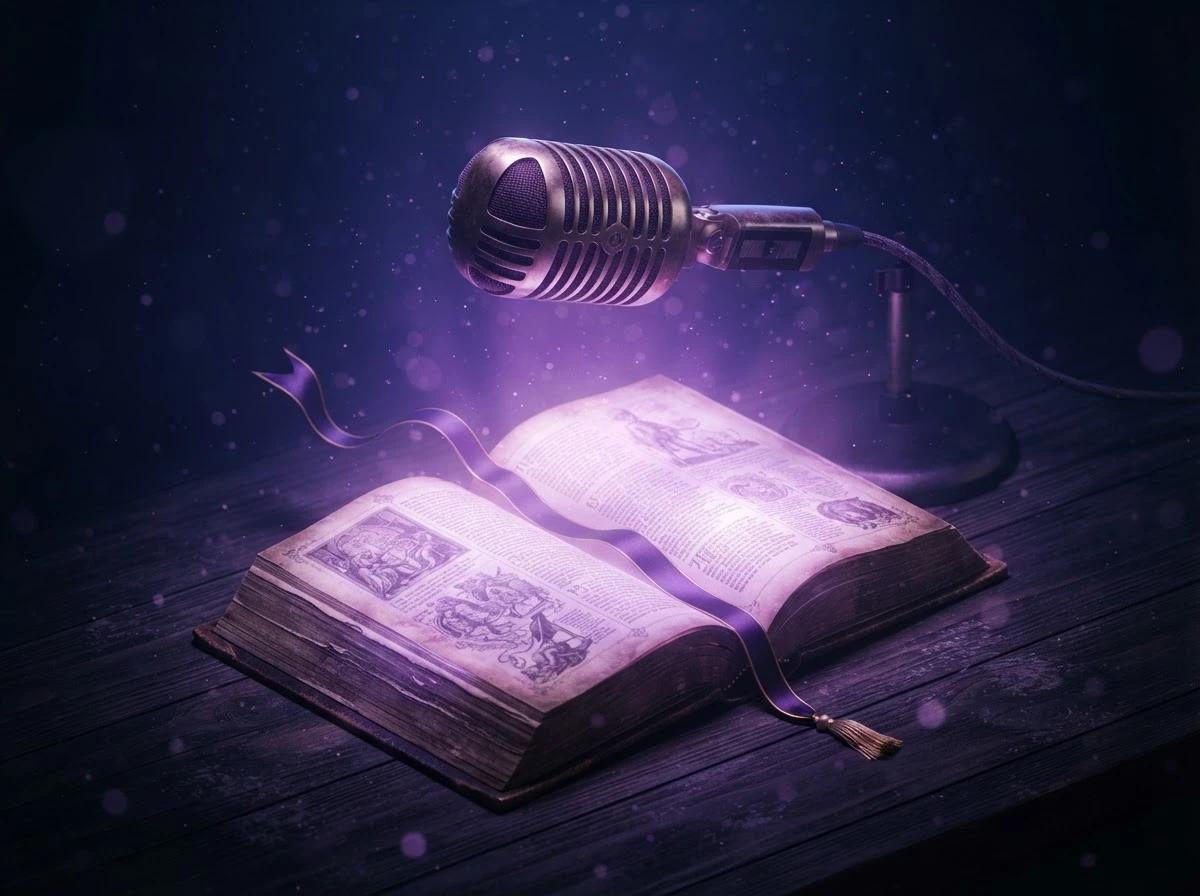
An Echo, as the Archive keeps it.
Before the first printing press, the old libraries kept instruments called Echoes.
The accounts disagree about who made them. A guild of librarians who had grown tired of burying storytellers, say some. A single mage who missed her father's voice, say others. But they agree on what an Echo did. It was a silver instrument that hung above an open book like a lantern, and when a page was set beneath it, the Echo did not read the words. It remembered them — for every word ever written carries a faint imprint of the voice that first thought it. The old order called that imprint mana. Echoes were the only instruments ever made that could hear it.
No two Echoes were alike. Each was tuned by the hands that built it, and each remembered voices a little differently.
When the great libraries fell, the Echoes were scattered and lost, one by one. Every book written since has been, in the old sense, mute. A voice sealed in ink, waiting.
They waited a long time.
We found one. Or built one — the stories will disagree about that too. What matters is that it is small enough to carry now, and the books are waking up.
The Finding
as the Keeper tells it
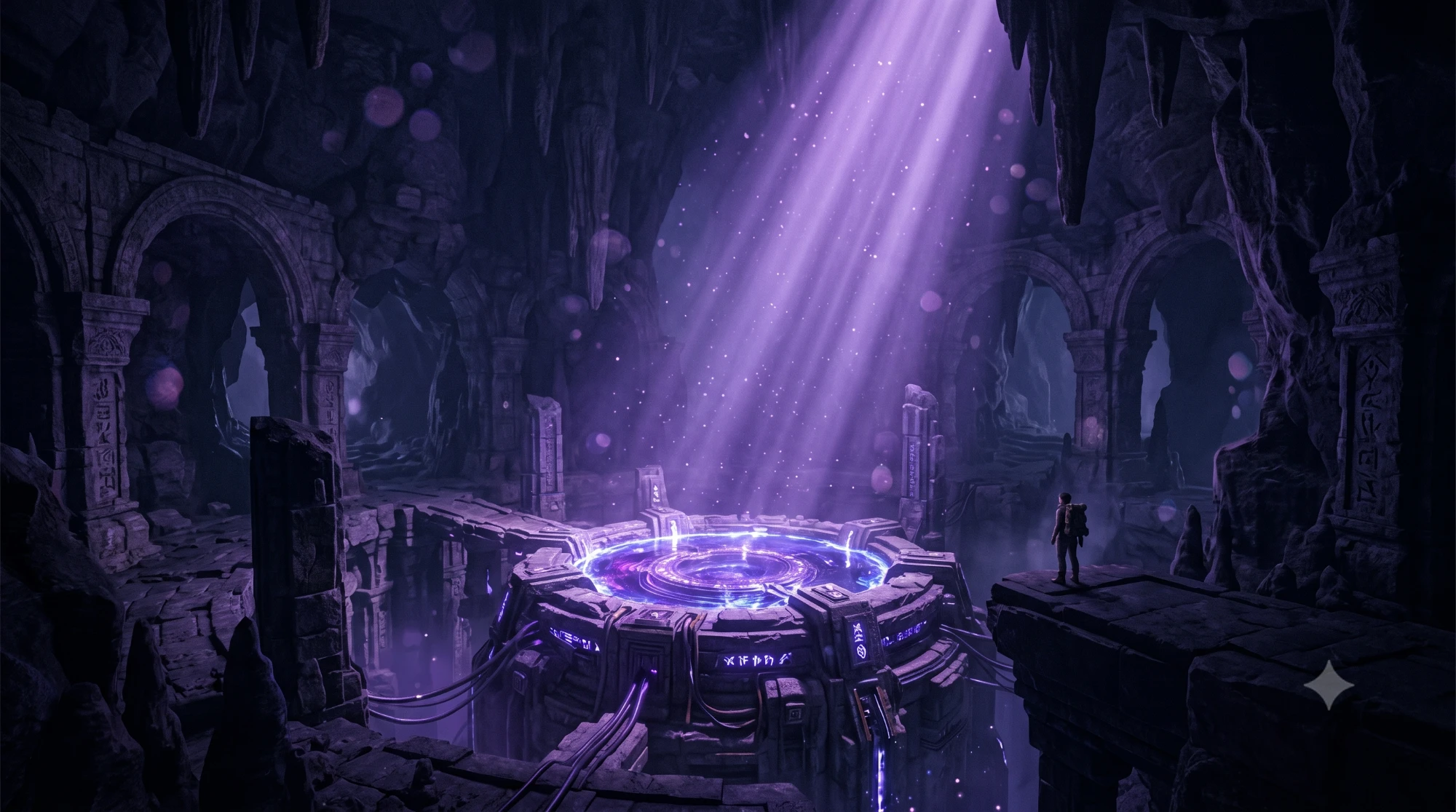
There is a story about how the last Echo came back into the world, and like every story that matters, it is told two ways. Some say it was found. Some say it was built. I was there, and I can tell you both tellings are honest.
I was not looking for an instrument. I was looking for a library — the drowned kind, the kind that survives only as a name crossed off old maps. The mountain had taken it centuries ago and let a river in through the roof, and everyone agreed there was nothing down there but cold water and worse footing.
The way in was by water, and the water was the strangest I have ever swum: lit from below, as if the moon had sunk there once and never quite finished drowning. The old order had a saying about that — moonlight has a long memory. I always took it for poetry. I no longer do.
I heard it before I saw it. Not music. Not a voice. Something smaller and stubborner than either — a hum about the size of one page.
On a stone shelf above the waterline lay an instrument on its side, silver gone dark as slate. Around its bands ran words in the old script: pacing, prosody, character, continuity, emphasis — the five disciplines of a telling, the ones every apprentice learned before they were allowed near a book. And at its center, where a lantern keeps its flame, sat a heart of crystal, dark as everything else in that place.
Except for one facet, thin as a fingernail. Still lit.
Somewhere in the drowned stacks below, one last book had been left open beneath it, and the instrument was still remembering it. Had been remembering it, page against the dark, for six hundred years. I have thought about that more than I have thought about anything else in my life: everything down there had surrendered — the shelves, the roof, the river had seen to all of it — and this one small machine had simply declined.
I did what you would have done. I gave it another page.
The letters came up off the paper the way heat comes off a summer road — pale, violet, unhurried — and streamed into the heart, and the heart took light the way a hall takes candles, one facet, then a row of them, then too many to count. The bands turned for the first time in six centuries. And the instrument spoke — softly, a little roughly, like the first words of the morning.
It was a woman's voice, young and clear. Later I would learn her name is Wren, and that of all the voices the Echo remembers, she is always the first to wake. The page I had fed it began, as so many pages do, with once upon a time — and I stood in a drowned library and listened to a dead instrument say it like the words had just been invented.
The body I could not save. Six hundred years of water had made it part of the shelf, and the shelf part of the mountain. But the heart came free — carefully, the way you take a coal from a fire you mean to carry — and it weighed almost nothing, and it did not stop humming the whole climb out.
So when they say I found an Echo, that is true, and when they say I built one, that is also true. I found a heart that had refused to stop remembering, and I built it a smaller body — one you could fit in a pocket, so that it would never again be anywhere a mountain could fall on it. That is the instrument the Archive keeps now. That is the one reading to you.
One more thing, since you have listened this far. Before I began the climb, I looked back once across the water. The shelf I had taken the heart from ran the whole length of the pool, out past where the moonlight reached.
It was not empty.
The Voices
The voices this Echo remembers best.
Hear them on the home page — the clips there come straight out of the instrument.
Every telling feeds the mana
The Archive grows one book at a time, and it grows fastest when stories get heard. Join the readers and authors building it.
Plain terms, because legends make poor contracts: Echo's narration is AI-generated, on your device, and always disclosed as such. The lore is how we dress. The disclosure is how we deal.